
Sidi Bou Said, Tunisia's newest UNESCO site
UNESCO inscribed the Village of Sidi Bou Saïd on the World Heritage List on 25 July 2026, making it Tunisia's tenth property. The Committee, meeting in Busan, accepted it under criterion (iii) as a village that grew around a saint's mausoleum under dynastic patronage. It also flagged landslide risk and overtourism.
By Iconic Tunisia. Last updated .
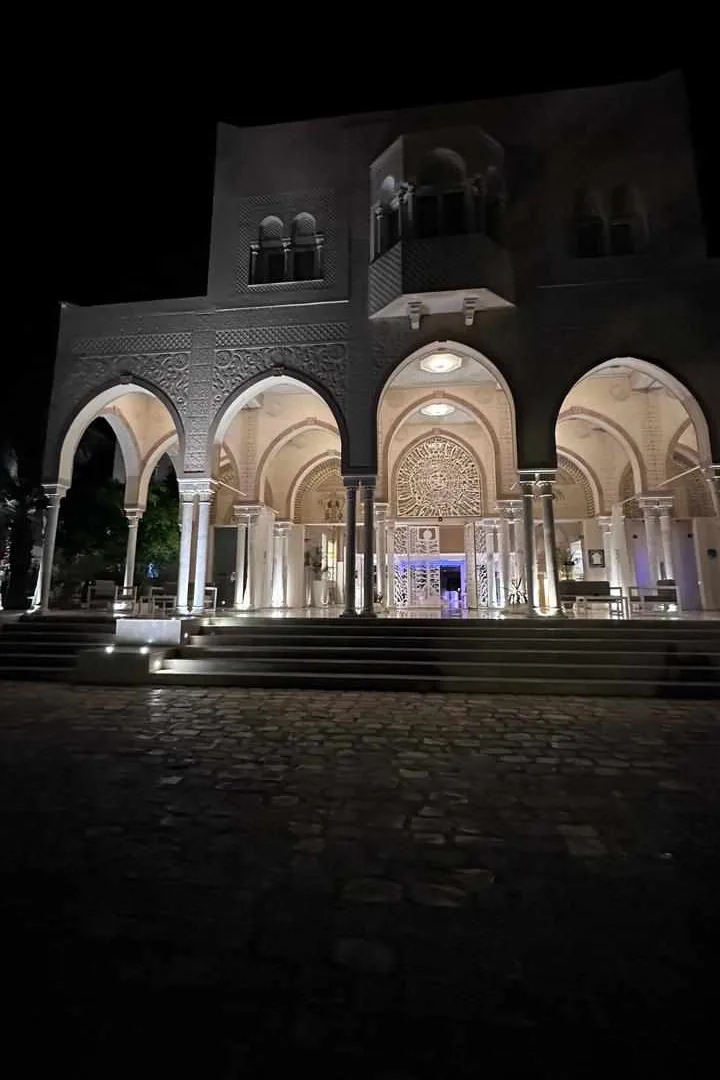
What happened
On 25 July 2026 the World Heritage Committee, meeting for its 48th session in Busan, inscribed the Village of Sidi Bou Saïd on the World Heritage List. It is Tunisia's tenth property, and the list stood at nine until that session.
| Item | Fact |
|---|---|
| UNESCO's name | Village of Sidi Bou Saïd. The inscription was made as "Village of Sidi Bou Saïd: Hub of Cultural and Spiritual Inspiration in the Mediterranean", and the Committee renamed the property the Village of Sidi Bou Saïd (UNESCO decision) |
| Decision | 48 COM 8B.15, at the 48th session in Busan, 19 to 29 July 2026 (UNESCO) |
| Date | 25 July 2026, from Tunisia's National Heritage Institute and Tunisian press. UNESCO's decision page gives the session and not the day (National Heritage Institute) |
| Criterion | (iii) |
| Area | 76.54 hectares, with a buffer zone of 84.44 hectares (UNESCO property page) |
| Where | On a hill overlooking the Mediterranean in northern Tunisia |
| Tunisia's total | Ten properties, nine cultural and one natural, and 15 on the Tentative List (UNESCO) |
Why UNESCO inscribed it, in its own words
UNESCO inscribed the village under criterion (iii), as "an exceptional testimony to the tradition of village foundations based on a symbiotic relationship formed between the spiritual authority of a saint and the temporal power of a ruling dynasty" (decision 48 COM 8B.15).
The history it gives is short. The village "developed as a sanctuary-village as a result of a process of aggregation around the mausoleum of a Sufi saint", supported by successive ruling dynasties which, "from the 16th century onwards, fostered the sacralisation of the place". The Husainid beys, from the 18th to the 20th century, then built holiday residences there and turned it into an elite resort. At its heart is the religious complex, around which the village follows a traditional Arab-Islamic plan, and it is enriched by the 19th to 20th century residences of the notables.
On the condition of the place, UNESCO says the urban morphology and the fabric of the village are well preserved, except for a marina introduced below the southern slope. The village is protected by a Beylical decree of 1915 and decree 85-1246 of 1985.
What UNESCO flagged
An inscription is also a list of what has to be watched, and UNESCO's text is plain about it.
- Landslides. "The site suffers dangerously from instability related to its geological nature and environmental factors." It asks, as a matter of urgency, for the historical documentation of the landslide phenomenon to be collected.
- Tourism. "Excessive tourism is a major concern that requires strategic reorganisation", because it shows to negatively affect the character of the property. It asks for the tourism model to shift to address the risks of overtourism.
- Management. The management plan has been prepared for a pilot phase until 2027 and will be developed further, and the Committee asks Tunisia to report to the World Heritage Centre by 1 December 2027.
The press adds one fact. The New Arab, reporting AFP, says January 2026 brought the heaviest rainfall in nearly 70 years, which sent mud down the alleys, destroyed facades and damaged homes (The New Arab).
What it means for a visit
We found no change announced to access, opening or fees in UNESCO's decision or in the Tunisian and regional reports of it, and we could not verify that there is one. Our programme sheets give the village a short visit, and some programmes sleep there. Our page on Sidi Bou Said describes what the sheets say of it.
| Programme | Day of the visit | What the day is called | Hotel in the Tunis area |
|---|---|---|---|
| Carthage, Kairouan and the Coast | Day 1 | Arrival in Tunis, and Sidi Bou Said | Dar Said, or similar |
| From Carthage to Kairouan | None listed | Not on the itinerary | Dar Said, or similar |
| The Splendors of Tunisia | Day 2 | Carthage, Sidi Bou Said, the Bardo and the medina | Dar Said, or similar |
| Tunisia's Marvels | Day 1 | Arrival in Tunis, and Sidi Bou Said | Dar Said, or similar |
| The Wonders of Tunisia | Day 2 | Carthage, Sidi Bou Said and the medina | Dar Said, or similar |
| Tunisia's Mediterranean Treasures | Day 2 | Carthage, the medina and Sidi Bou Said | The Residence Tunis, or similar |
| Students Fun Tour | Day 2 | Sidi Bou Said, the medina and Hammamet | El Mouradi Gammarth, or similar |
Read from our itineraries and hotel lists. "Or similar" is on each of these lines in the sheets. Dar Said is a guest house in the village itself. The hotels in the Tunis area are described in the hotels we use in Tunisia.
If you are travelling for the eclipse of 2 August 2027, Sidi Bou Said is outside the path of totality and sees a partial eclipse only. The places inside it are in the eclipse guide.
Tunisia's ten World Heritage properties
| Property | Type | Inscribed | Criteria | Area, hectares | On our programmes |
|---|---|---|---|---|---|
| Medina of Tunis | Cultural | 1979 | (ii)(iii)(v) | 296.41 | 6 of 7 programmes |
| Archaeological Site of Carthage | Cultural | 1979 | (ii)(iii)(vi) | 498.08 | 6 of 7 programmes |
| Amphitheatre of El Jem | Cultural | 1979 | (iv)(vi) | 1.37 | 6 of 7 programmes |
| Ichkeul National Park | Natural | 1980 | (x) | 12,600 | Not a stop on any programme |
| Punic Town of Kerkuane and its Necropolis | Cultural | 1985 | (iii) | 0.1119 | 1 of 7 programmes |
| Medina of Sousse | Cultural | 1988 | (iii)(iv)(v) | 31.68 | 5 of 7 programmes |
| Kairouan | Cultural | 1988 | (i)(ii)(iii)(v)(vi) | 68.02 | 5 of 7 programmes |
| Dougga / Thugga | Cultural | 1997 | (ii)(iii) | 75 | 6 of 7 programmes |
| Djerba: Testimony to a settlement pattern in an island territory | Cultural | 2023 | (v) | 5,460.477 | 2 of 7 programmes visit the island. We have not checked which parts are inside the property |
| Village of Sidi Bou Saïd | Cultural | 2026 (25 July) | (iii) | 76.54 | 6 of 7 programmes |
From UNESCO's page for Tunisia, which links each property. The count of programmes is read from our itineraries and counts a programme that lists the property as a visit. Ichkeul National Park, the one natural property, was on the List of World Heritage in Danger from 1996 to 2006.
Fifteen more places are on Tunisia's Tentative List. Being on it is not inscription. Chott el Djerid, Sbeitla, the troglodyte habitat and the ksour of the south, and the Medina of Sfax are on that list and are not World Heritage properties.
Where sources disagree about the village's age
UNESCO's own text says the dynasties fostered the place from the 16th century onwards, and the Husainid beys built there from the 18th century. The press accounts differ. The New Arab, reporting AFP, says the village was built in the 18th century around the shrine of the Sufi master. The Peninsula, reporting the Qatar News Agency, says it was built around the tomb of a Sufi saint who lived in the 12th and 13th centuries (The Peninsula). These describe different things, the village and the saint, and we rely on UNESCO's wording.
What we could not verify
- Whether the inscription changes access, opening or fees. None of our sources says.
- The calendar day from UNESCO itself. The day, 25 July 2026, is from the National Heritage Institute and press reports, and UNESCO's decision page gives the session.
- Which parts of the island of Djerba fall inside its inscribed property.
Questions and answers
- Is Sidi Bou Said a UNESCO World Heritage Site?
- Yes. The World Heritage Committee inscribed the Village of Sidi Bou Saïd at its 48th session in Busan, in decision 48 COM 8B.15, under criterion (iii). Tunisia's National Heritage Institute and Tunisian press date it 25 July 2026. It is Tunisia's tenth property.
- How many UNESCO World Heritage Sites does Tunisia have?
- Ten: nine cultural and one natural. They are the Medina of Tunis; Archaeological Site of Carthage; Amphitheatre of El Jem; Ichkeul National Park; Punic Town of Kerkuane and its Necropolis; Medina of Sousse; Kairouan; Dougga / Thugga; Djerba: Testimony to a settlement pattern in an island territory; and the Village of Sidi Bou Saïd, inscribed in 2026. Fifteen more are on UNESCO's Tentative List, which is not inscription.
- Why was Sidi Bou Said inscribed?
- UNESCO says it is an exceptional testimony to the tradition of village foundations based on a relationship between the spiritual authority of a saint and the temporal power of a ruling dynasty. It grew as a sanctuary village around a saint's mausoleum, supported by dynasties that from the 16th century onwards fostered the place, and the Husainid beys later built holiday residences there and made it an elite resort.
- What concerns did UNESCO raise about Sidi Bou Said?
- It says the site suffers dangerously from instability linked to its geology and environment, and that excessive tourism is a major concern needing strategic reorganisation. It notes a marina below the southern slope, a management plan prepared as a pilot until 2027, and asks Tunisia to report by 1 December 2027.
- Is Sidi Bou Said on your private tours of Tunisia?
- Six of our seven programmes list a visit, on the first or second day, and several sleep at Dar Said, a guest house in the village. The programmes and the day each visits are in the table on this page.
- Is Sidi Bou Said inside the path of the 2027 solar eclipse?
- No. Sidi Bou Said is outside the path of totality on 2 August 2027 and sees a partial eclipse only, covering 0.9636 of the Sun's diameter at the maximum on our working from NASA's elements.
Sources
Every figure in this guide names where it came from. These are the sources, in the order the guide first uses them. Where a figure is our own working on a source's numbers, the guide says so beside it. Figures about our own programmes, the prices, the itineraries, the hotels and the months we suggest, come from the programme documents behind each journey page.
- UNESCO decision 48 COM 8B.15, Village of Sidi Bou Saïd
UNESCO World Heritage Committee. Official.
- UNESCO, 48th session of the World Heritage Committee
UNESCO World Heritage Centre. Official.
- National Heritage Institute, Sidi Bou Saïd inscribed, 25 July 2026
Institut National du Patrimoine (Tunisia). Official.
- UNESCO World Heritage Centre, Village of Sidi Bou Saïd
Official.
- UNESCO World Heritage Centre, Tunisia
Official.
- The New Arab, Tunisia's Sidi Bou Said inscribed on UNESCO World Heritage list
Published.
- Iconic Tunisia journey pages, from our own programme documents
Published.
- The Peninsula, UNESCO places Tunisia's Sidi Bou Said village on World Heritage list
The Peninsula (Qatar News Agency). Published.
Written by Iconic Tunisia and last checked against these sources on 11 October 2026. Nothing here is legal, medical or insurance advice.
Where to go from here
Carthage, Kairouan and the Coast
Its first day is the arrival in Tunis and a visit to Sidi Bou Said before the welcome dinner, and it sleeps at Dar Said in the village.
7 days, from $1,950 per person in a double room.
Starting takes two minutes. We ask for your rough dates, who is travelling and where to reply, and nothing about payment or passports.
We reply within one business day, US Eastern time.